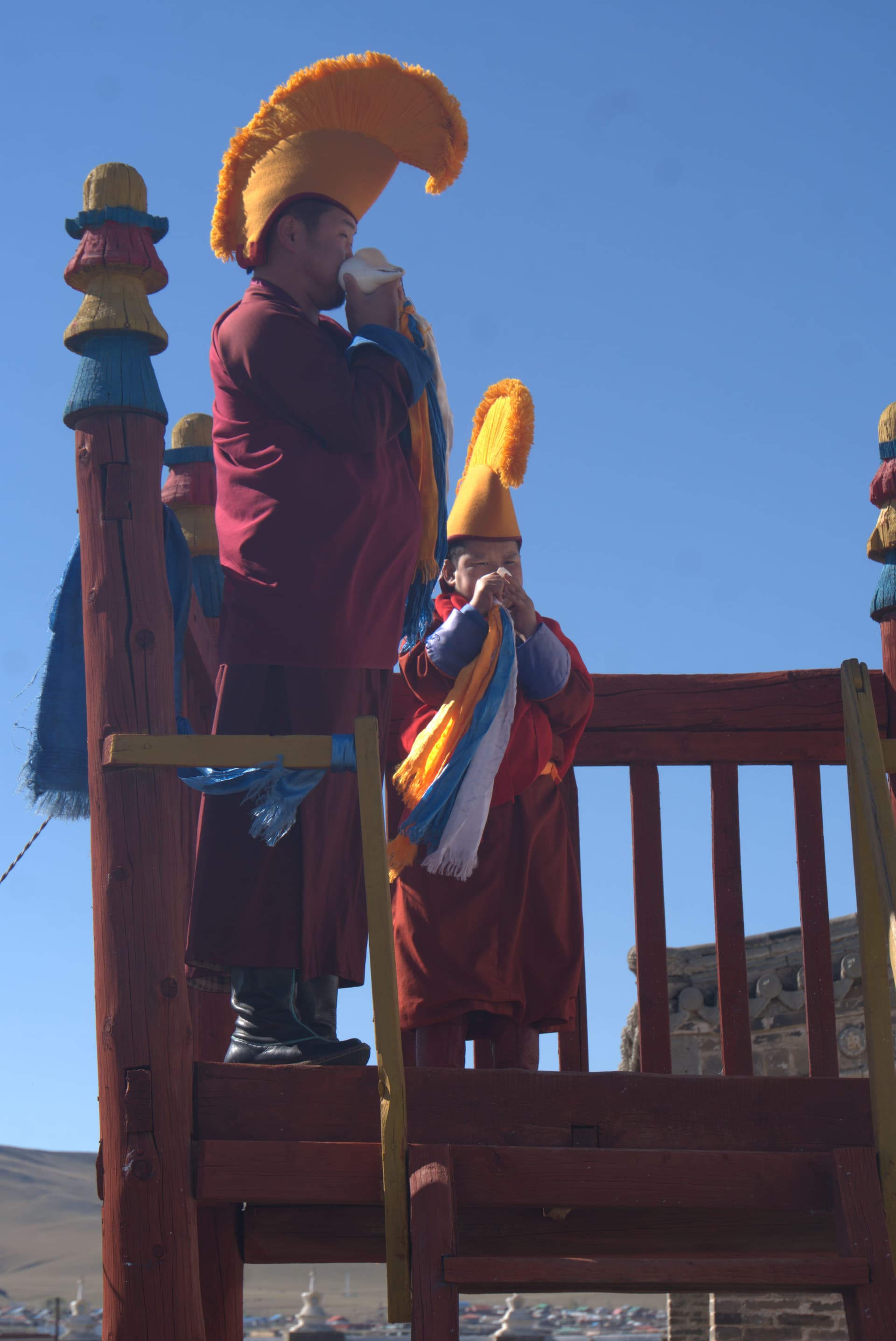
The Spiritual Side Of Mongolia

Although Mongolian indigenous beliefs had suffered a great deal during the USSR anti-religious campaigns, more than half of the residents are proudly Buddhist. Mongolian Buddhism derives from the Gelug sect of Tibetan Buddhism, one sect that garners a lot of Westerns' attention, but it presents its own unique characteristics. The most important spiritual Buddhist sites in the country are the Erdene Zuu Monastery in Central Mongolia, Amarbaysgalant monastery in Northern Mongolia, Baldanbereeven monastery in Eastern Mongolia, Khamar monastery in the Gobi and Gandan monastery in Ulaanbaatar.
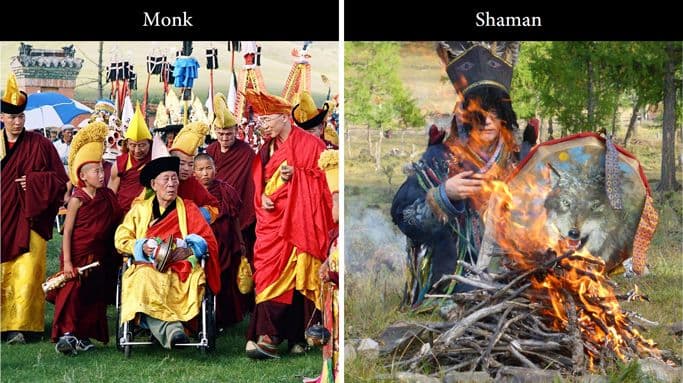
 mongolian shaman buddhist monk

On the other hand, prior to the 15th century, the ruling religion of Mongolia was that of the great blue sky – “hoh tenger”. This system of traditional beliefs and practices, known in the west as Shamanism, is based on the idea that the visible world is full of invisible forces or spirits. The shaman as intermediary between the natural and spiritual world, communicates with the spirits of water, wind, fire, trees, the moon and so on, for assistance in healing, hunting or changing the weather. The healers of the Buu, as it is known in Mongolia today, are still performing these peculiar rituals.
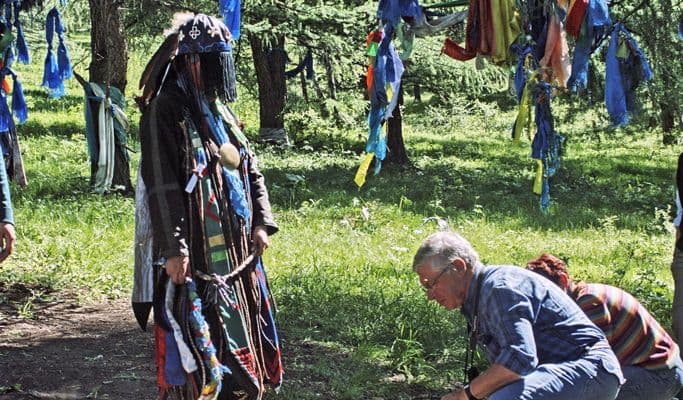
Mongolian shaman

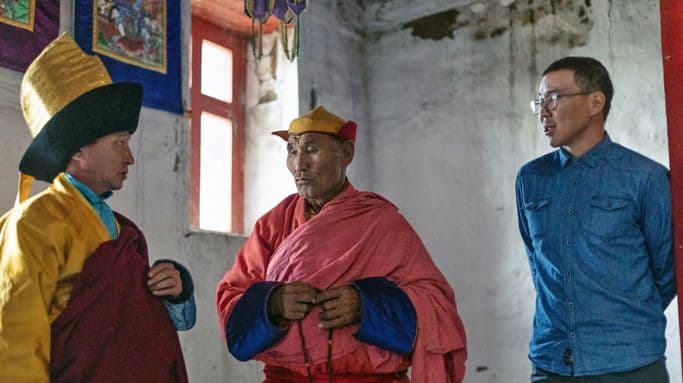
We make special arrangements for you to stay in Buddhist monasteries; learn more about Buddhism, understand how the monks of this Tibetan philosophy dedicate themselves to spiritual awareness, and take time to relax. Also, meetings with shamans and have an actual communication with his spirits, which may help you find the answers to questions that you were always looking for. These spiritual experiences can be arranged for you as standalone tours or added to another tour of your choice.
Blog image

So, if you want to experience living with Buddhist monks or talking to an in-trance shaman, search no more and contact us! Accompanied by experienced guide, you will have a conversation with the Shaman to shed some light on the secrets of Shamanism, the role of Shaman in society, and the way the Shaman interacts with other worlds. And at the end of the conversation, the Shaman shall perform a ritual and connect with his spirits. Or live with Buddhist monks who shall give us unique insight on Mongolian Buddhism, and a glimpse into monastic life. This is a rare opportunity to understand another unique aspect of Mongolian culture and religious beliefs and practices.

Share this article

Blogs

Welcome to the Mongolian Ways Travel articles!

nomadic family

8 Things To Do While Staying With Nomadic Family

A very special way to discover the lifestyle and traditions of the Mongols is to homestay few days with nomadic families. Mongolian nomads live in ger, a round felt-covered dwelling, which has been used by Central Asian nomads for centuries. The word ger is literally translated as home in Mongolian, while its Turkish term “yurt” means homeland. Indeed, the ger provides shelter in a landscape that is both beautiful and harsh. Without visiting this ancient accommodation and meeting families living there, one would never truly get an honest taste of the nomadic lifestyle that Mongolians still treasure to this day. About three- quarters of the country's population are estimated to be living as nomadic herders. These people are renowned for their wonderful hospitality towards visitors, because of their tradition of helping one another and isolation from the outside world. And we present to you 8 things you can experience while staying with Mongolian nomads.

horseback riding in mongolia

Horseback Riding In Mongolia

If you are planning to travel to Mongolia, horseback riding can be a startling experience to feel the deep connection of Mongolian nomads and their horses. For centuries, horses have been worshiped and respected by the steppe nomads. Having as many horses as people in a modern world proves how nomadic lifestyle is still revolving in Mongolia. They are used for transportation, herding, hunting, and horse racing. All children in the countryside learn to ride at the age of 4 and become jockeys by age of 7. Even today most Mongolians know how to ride a horse, whether they live in the city or in the countryside. Therefore, riding a horse in Mongolia is a great opportunity to feel the spirit of this nation.

shaman ceremony

Shamanism In Mongolia

Shamanism is a practice that involves a practitioner reaching altered states of consciousness to interact with the world of spirits. The term "shamanism" was first applied by Western anthropologists as outside observers of the ancient religion of the Turks and Mongols, and those of the neighboring Tungstic- and Samoyedic-speaking people. Fundamental belief of shamanism is that the universe is alive: all living beings have a conscious soul animating them – humans, animals, birds, insects, reptiles, plants, etc. A shaman is someone who has access to the world of spirits, enters into a trance state during a ritual, practices divination and healing with the help of spirits.

Golden Eagle - The Wings of the Kazakh

Golden Eagle - The Wings of the Kazakh

The Altai Mountains, one of the most secluded areas in the world, covers a vast area of over 16,000 kilometers, forming an impregnable barrier against globalization with its permanently snow-covered peaks that rise above 4,500m. This land of undiscovered beauty and wilderness is home to the Kazakhs, who have been preserving the ancient tradition of falconry to these days. Although falconry is still popular in many countries, including the United Kingdom and Saudi Arabia, hunting with golden eagles is exclusively a Kazakh practice.