The Die-Hard Nomads

Cooperating with Gobi, Mongolian Cashmere

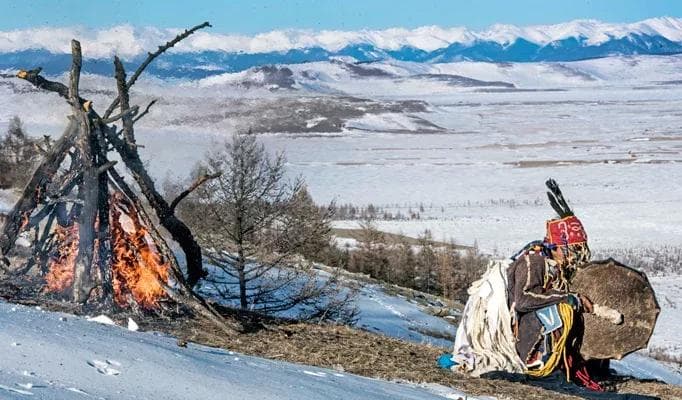
Nature has shaped the religion and the philosophy of Mongolians. It has inspired a simplified and satisfying way of living. Through thousands of years, nomads have passed down their wisdom of worshipping, adapting, and living in harmony with nature instead of being frightened by it, or destroying it. Shamanism, one of the oldest religious beliefs still exists among Mongolians today in a close relationship with the original ideology that values an existence congruent with nature.

Experiencing the nomad life is not only about how to deal with animals, but also learning about how to survive in nature by preventing possible dangers. Mongolians have had a long tradition of predicting the weather by using clues given by nature. It is very common for nomads to stay outside just standing and feeling, observing nature as well as the animals around. After spending some time in silence, nomads start to tell their kids what to do to keep their livestock safe from possible natural occurrences. For example, mesmerizing red skies are not just a beautiful color display for nomads, it foreshadows a sunny day. These tough people have always acknowledged that animals use their sixth sense the best and tell them what is coming soon by their act. The most common old fashion signs has to do with cattle. When they sense that the weather is going to change for the worse, they will move away from any exposed hills and gather in the lower elevations for protection. The list of natural signs nomads use every day to monitor the weather is long enough to make up a whole book.
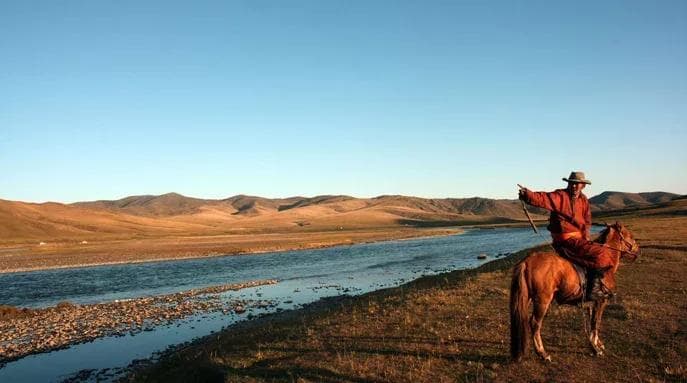
mongolian nomad predicting weather

One of the brightest examples is the moving novel that is an international hit and bestseller, Wolf Totem. The book describes nomads and their nomadic lifestyle, roaming the steppes with their sheep and cows in harmony with nature, based on a true story. The nomads both loved and hated the wolves which would attack them and their livestock, but were also their objects of worship. The novel tells the tale of nomads and settlers and their relation with wolves. This is still true and still practiced out there in the countryside of Mongolia by the nomads.
Blog image

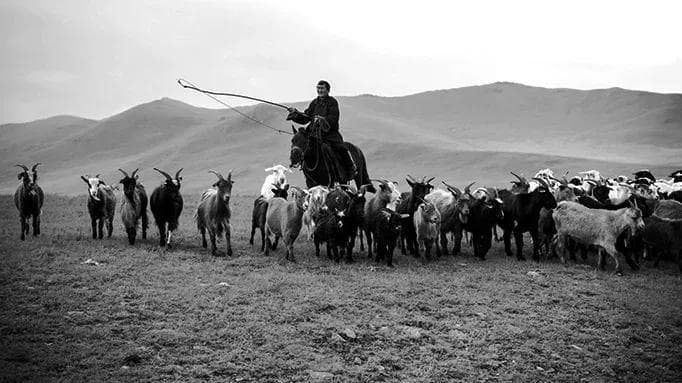
A herder’s knowledge as considered as “king knowledge” and herders as “the masters of a thousand skills”. That is honest evolution indeed; a herder becomes meteorologist when they analyze the weather, a botanist when they choose pastureland, a zootechnics when they feed cattle, a biopsychologist when tending their livestock, an economist when selling wool, cashmere fiber, meat and skins of animals and food production technologist when preparing dairy products. There is no other way but to define it rather than a “fine science” when herders memorize their hundreds of sheep individually by their appearance and can point out the location of their horses even when they haven't seen them in days with the same accuracy of GPS device. On the other side, this is proven in real life when travelers are mesmerized by the driving skills of Mongolians out in the countryside where the landscape looks pretty similar to those who have never been to Mongolia.

Share this article

Blogs

Welcome to the Mongolian Ways Travel articles!

nomadic family

8 Things To Do While Staying With Nomadic Family

A very special way to discover the lifestyle and traditions of the Mongols is to homestay few days with nomadic families. Mongolian nomads live in ger, a round felt-covered dwelling, which has been used by Central Asian nomads for centuries. The word ger is literally translated as home in Mongolian, while its Turkish term “yurt” means homeland. Indeed, the ger provides shelter in a landscape that is both beautiful and harsh. Without visiting this ancient accommodation and meeting families living there, one would never truly get an honest taste of the nomadic lifestyle that Mongolians still treasure to this day. About three- quarters of the country's population are estimated to be living as nomadic herders. These people are renowned for their wonderful hospitality towards visitors, because of their tradition of helping one another and isolation from the outside world. And we present to you 8 things you can experience while staying with Mongolian nomads.

horseback riding in mongolia

Horseback Riding In Mongolia

If you are planning to travel to Mongolia, horseback riding can be a startling experience to feel the deep connection of Mongolian nomads and their horses. For centuries, horses have been worshiped and respected by the steppe nomads. Having as many horses as people in a modern world proves how nomadic lifestyle is still revolving in Mongolia. They are used for transportation, herding, hunting, and horse racing. All children in the countryside learn to ride at the age of 4 and become jockeys by age of 7. Even today most Mongolians know how to ride a horse, whether they live in the city or in the countryside. Therefore, riding a horse in Mongolia is a great opportunity to feel the spirit of this nation.

shaman ceremony

Shamanism In Mongolia

Shamanism is a practice that involves a practitioner reaching altered states of consciousness to interact with the world of spirits. The term "shamanism" was first applied by Western anthropologists as outside observers of the ancient religion of the Turks and Mongols, and those of the neighboring Tungstic- and Samoyedic-speaking people. Fundamental belief of shamanism is that the universe is alive: all living beings have a conscious soul animating them – humans, animals, birds, insects, reptiles, plants, etc. A shaman is someone who has access to the world of spirits, enters into a trance state during a ritual, practices divination and healing with the help of spirits.

Golden Eagle - The Wings of the Kazakh

Golden Eagle - The Wings of the Kazakh

The Altai Mountains, one of the most secluded areas in the world, covers a vast area of over 16,000 kilometers, forming an impregnable barrier against globalization with its permanently snow-covered peaks that rise above 4,500m. This land of undiscovered beauty and wilderness is home to the Kazakhs, who have been preserving the ancient tradition of falconry to these days. Although falconry is still popular in many countries, including the United Kingdom and Saudi Arabia, hunting with golden eagles is exclusively a Kazakh practice.