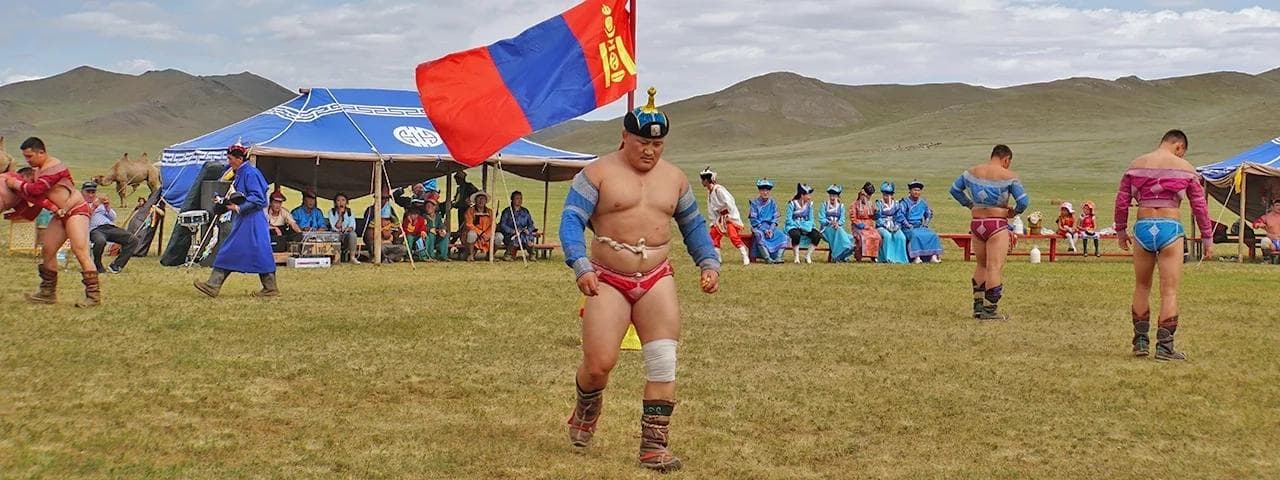
The Nomads of Mongolia
The Nomads of Mongolia
With a population of around 3 million and the area of 1,566,000 square km (605,000 sq mi), Mongolia is the most sparsely populated country in the world and also home to one of the last remaining nomadic cultures. A various ethnic groups, most notably the world-renowned Kazakh eagle hunters and the Tsaatan (reindeer herders), inhabit the country's 21 provinces. Almost every aspect of Mongolian society has been shaped by the pastoral nomadism, a complex adaptation to environments marked by extreme, unpredictable weather.
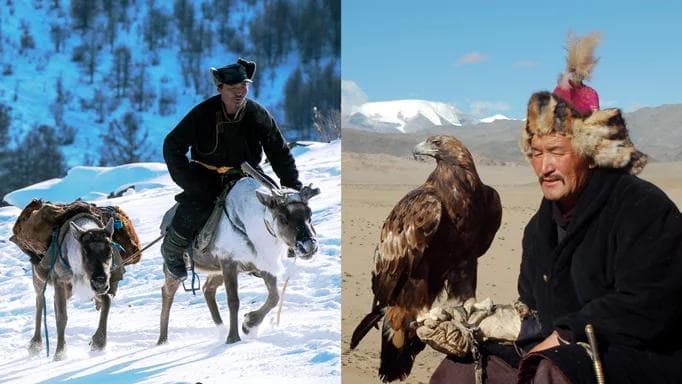
Because of its continental climate, Mongolia’s precipitation is not only low but also varies from year to year and from place to place. In a country like this, grain can grow but not every year and not enough to support the whole population. Therefore, ancient Mongolians had chosen pastoralism over agriculture, which values mobility and the ability to cope with problems by moving away from threats or toward resources.
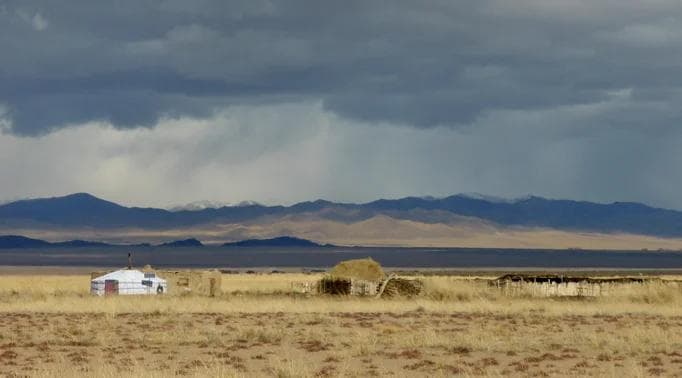
Mongolian traditional nomadic lifestyle is based on breeding of five animals: cattle, sheep, goats, camels and horses. The products that come from these animals complete almost all the basic needs of a family. In general, sheep wool is transformed into felt and used to make clothes, bedding and covers of a ger. Horses, camels and yaks are used for transportation. And obviously, all five species of animals provide meat, the main part of the Mongolian diet. The nomads form a herding camp with two to six households that manage its flock as a union. Since each species of animals separately graze, it is nearly impossible for one family to maintain such care.
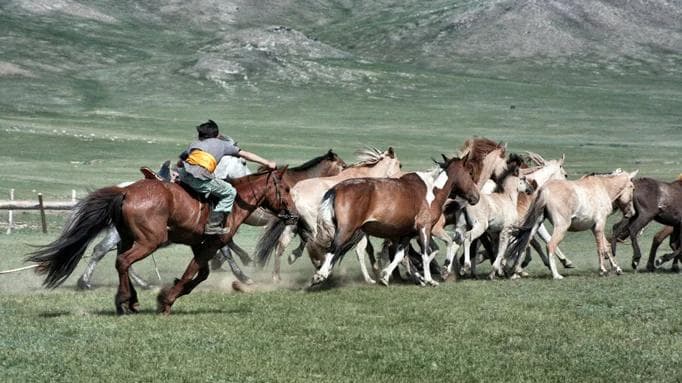
Nomadism requires a good understanding of natural cycles and an appropriate selection of pastures to satisfy the needs of the different animals. Each season, families must move to a suitable location for a camp. When animals are weaker in spring after a long winter, nomads choose pasture in lower lands that’s less rocky, marshy and grass grows relatively early. In winter, the leeward sides of mountains or hills are preferred to protect against the cold Siberian winds. Animals are kept in a sheltered enclosure during the night or snowfall. But in summer and autumn, nomads move closer to rivers and lakes in large, open pastures to get their animals fattened as much as they can for the next winter. Mongolian summer is a kind of paradise for nomads and animals!
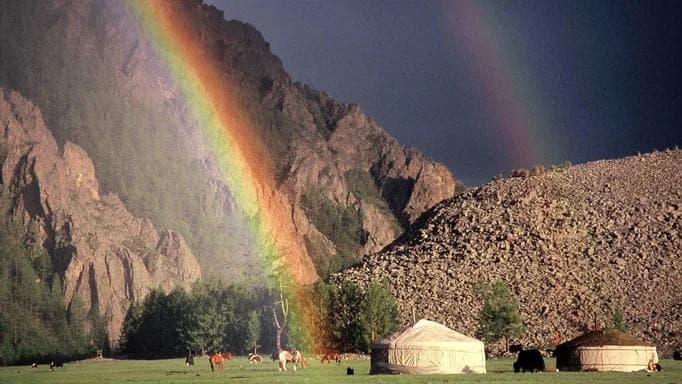
Depending on the region, the distance the nomads have to cover to reach their seasonal camp differs. In the forest areas, where there’s much more rain, an average distance would be around 15-20 km. Families can travel up to 150 km to find water and pastures in the dry mountainous areas or desert. Nomads consider migration a sacred tradition. Any quarrel, any agitation, during the migration or its preparation, is a bad omen. On the day of departure, they dismantle their ger (portable round dwelling) into pieces and pack all the possessions on carts and move (nowadays in a truck). According to the Mongolian tradition, if a family moves past, one must invite them to share tea and curds.
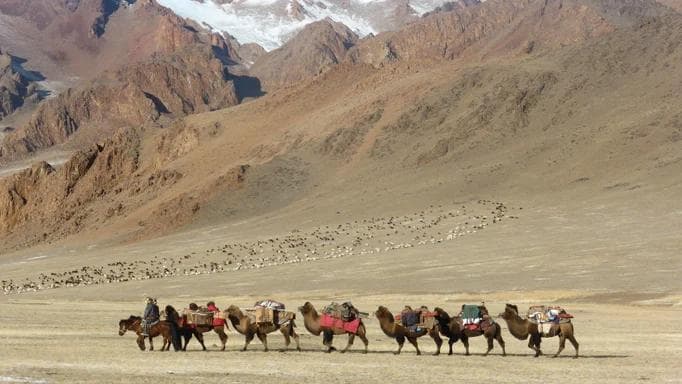
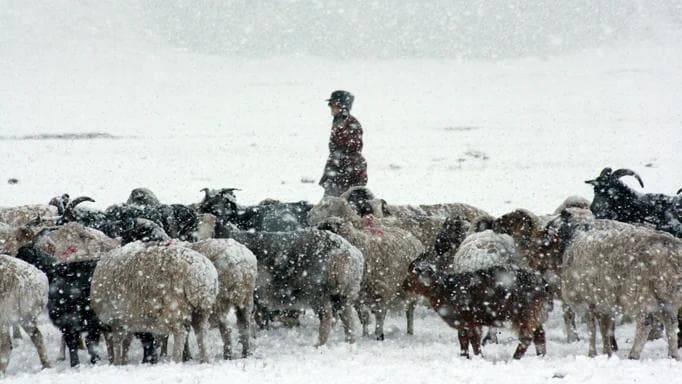
The greatest challenge to nomadic families comes with harsh winters known as zud. Continues catastrophic storms coming in midwinter or in the spring lambing time can wipe out entire herds or severely reduce the number of animals. To balance this, herders purposely slaughter the animals that's unlikely to survive the winter and sell its meat. Around the 2000s, Mongolia had several tough winters in a row, which resulted in a massive urban migration to the suburbs of the capital city to find jobs. The economic boom years of 2010 - 2012 after the discovery of one of the world’s biggest gold/copper mine in 2010 was also a significant contributing factor to the recent migration. But many families that left the countryside are going back to their open steppes as they realize that urban life is not for everyone.
Today, despite exponential growth in international travel and mining, Mongolia has remained one of the few fascinating places that has escaped the trampling of travelers’ boots and heavy machineries. An attractive destination for those looking for a unique combination of primordial landscapes and nomadic culture, almost vanished elsewhere in the world, Mongolia has held on to the old ways while sampling the new. Mongolia’s nomads, over one-third of the population, have retained their traditions since the days of Chinggis Khan’s empire, while services and facilities for travelers have taken big strides to improve the level of service and quality of infrastructure. A visit to Mongolia — the land of spectacular scenery and remarkable history - is a unique experience unlike any other.


