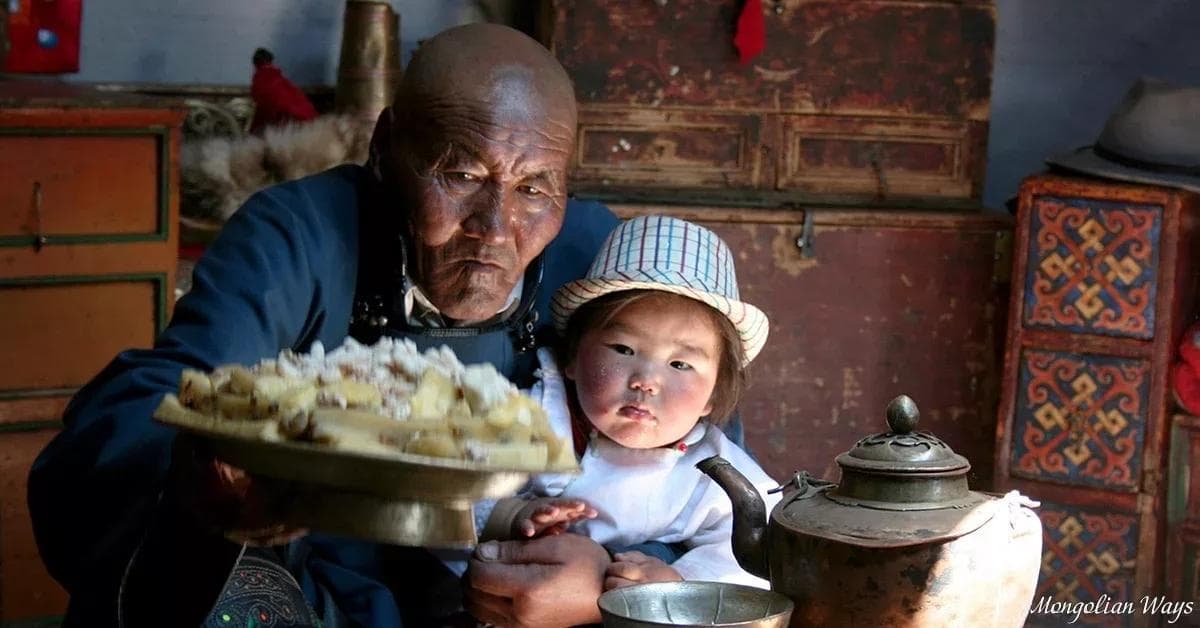
Mongolian Family System

The family unit serves as the fundament to steppe-nomads' societies for millennials.

The family is sacred through most East-Asian cultures. Evidence can be found in the thousands of years old Chinese Folk Religion, in which an altar to the family's forefathers can be found in nearly every Chinese house, and ancestor worship is carefully practiced throughout the country. Proper familial relations form a significant part of the Analects, the 2,500 years old compilation of Confucius's teaching, which to date still set the social norms for much of the region.

Nomadic practices extend familial relations from social entity to financial interdependency. A viable family can efficiently manage an autarkic household that would withstand shifts in social, sovereign, and mainly climatic circumstances typical to the wind-swept plains at which temperatures can vary from freezing -40˚C to boiling +40˚C. The base of familial relationships is Filial piety- a term referring to the inherent and deep respect to elders- from one's parents and all the way to the family's ancestors. The father officially serves as the head of the family. His role can be described as the "minister of foreign affairs". In contrast, the mother's role is somewhat of a "minister of interior", often an equivalent partner to decision making and the day-to-day functionalities.
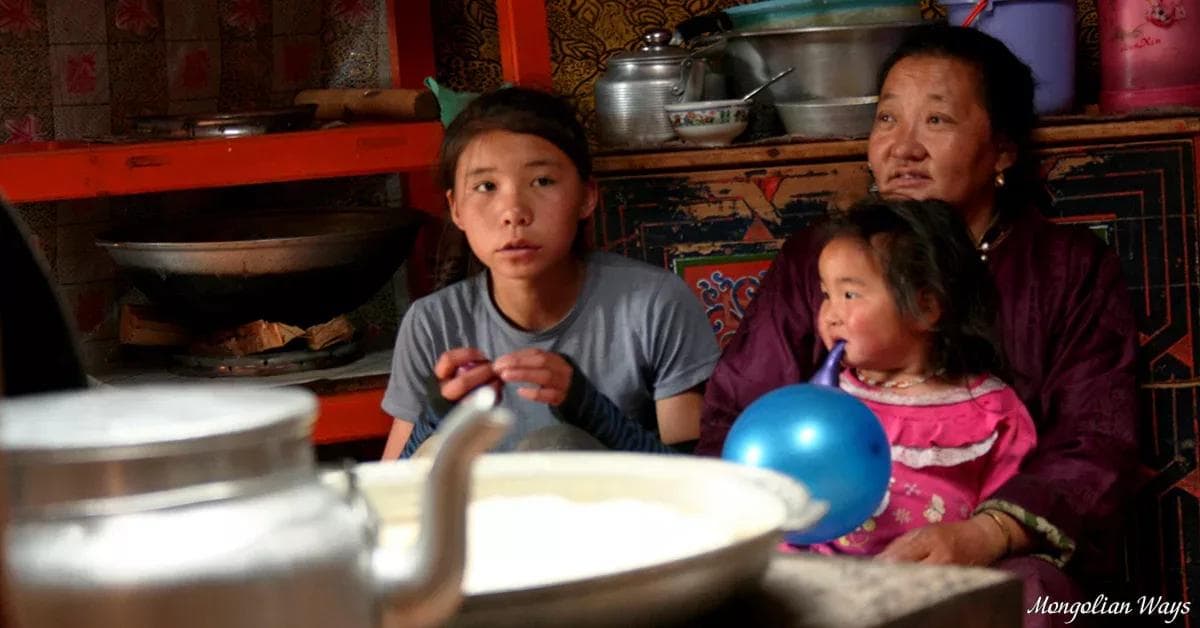
nomadic women at home

Up until the beginning of the 20th century, Mongolian families could have traced their family routes seven generations back or even more, while noble families could show direct linkage to the "Golden Family", the line of descendants of Chinggis Khan, the forefather of the Mongolian nation. Together with many other cultural and traditional attributes that were wiped out during the 70 years' communist era, also family worship made way to worshipping the communist party's leaders. Their portraits took over the old photos and paintings of family ancestors.
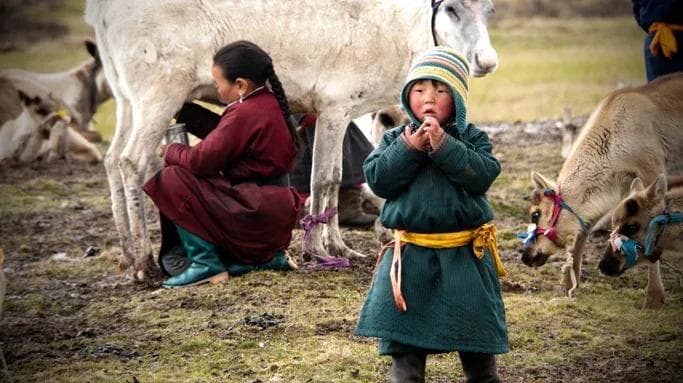
reindeer tsaatan people

When the family's daughters are married, they would traditionally become part of their newlywed husband's family. They would then migrate to the area where the husband's family graze their herds. When the sons are married, they would bring along their new wives, erect their "ger" (the traditional felt-made dwellings typical to the central-Asia nomads, often referred to as Yurt) in proximity to the parents' ger, and would keep their livestock in the vicinity of the family's graze. This way, several related households could share the chores involved with life on the steppes, such as guarding against prey animals, milking, shearing wool, and combing the fine cashmere fibers off the goats.
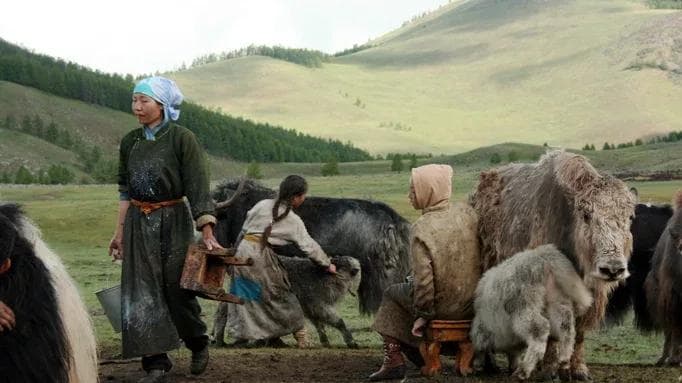
Mongolian women milking yaks

Traditionally, the youngest son remains living with his parents, together with his wife and children, taking care of them for the rest of their lives. When the time comes, he will inherit the entire parents' belongings.
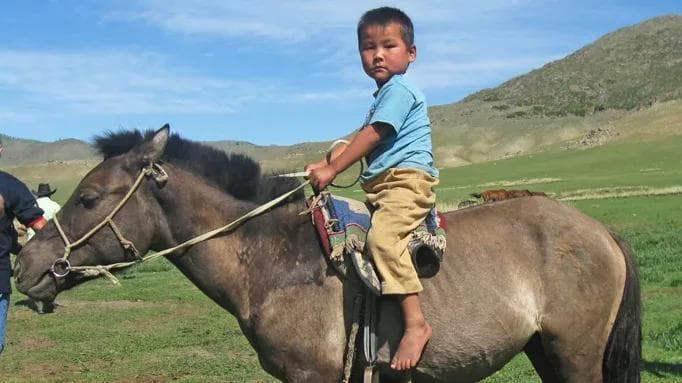
mongolian boy learning to ride horse

The extended family structure forms the foundations for the larger clan. In former times, this, in turn, served as the foundation to tribal societies which Chinggis Khan had unified some 800 years ago into one nation, under one flag. Nevertheless, to these very days, family ties form the core of Mongolian society, and one could not argue that here in Mongolia, and all throughout Asia, blood is thicker than water.

Share this article

Blogs

Welcome to the Mongolian Ways Travel articles!

nomadic family

8 Things To Do While Staying With Nomadic Family

A very special way to discover the lifestyle and traditions of the Mongols is to homestay few days with nomadic families. Mongolian nomads live in ger, a round felt-covered dwelling, which has been used by Central Asian nomads for centuries. The word ger is literally translated as home in Mongolian, while its Turkish term “yurt” means homeland. Indeed, the ger provides shelter in a landscape that is both beautiful and harsh. Without visiting this ancient accommodation and meeting families living there, one would never truly get an honest taste of the nomadic lifestyle that Mongolians still treasure to this day. About three- quarters of the country's population are estimated to be living as nomadic herders. These people are renowned for their wonderful hospitality towards visitors, because of their tradition of helping one another and isolation from the outside world. And we present to you 8 things you can experience while staying with Mongolian nomads.

horseback riding in mongolia

Horseback Riding In Mongolia

If you are planning to travel to Mongolia, horseback riding can be a startling experience to feel the deep connection of Mongolian nomads and their horses. For centuries, horses have been worshiped and respected by the steppe nomads. Having as many horses as people in a modern world proves how nomadic lifestyle is still revolving in Mongolia. They are used for transportation, herding, hunting, and horse racing. All children in the countryside learn to ride at the age of 4 and become jockeys by age of 7. Even today most Mongolians know how to ride a horse, whether they live in the city or in the countryside. Therefore, riding a horse in Mongolia is a great opportunity to feel the spirit of this nation.

shaman ceremony

Shamanism In Mongolia

Shamanism is a practice that involves a practitioner reaching altered states of consciousness to interact with the world of spirits. The term "shamanism" was first applied by Western anthropologists as outside observers of the ancient religion of the Turks and Mongols, and those of the neighboring Tungstic- and Samoyedic-speaking people. Fundamental belief of shamanism is that the universe is alive: all living beings have a conscious soul animating them – humans, animals, birds, insects, reptiles, plants, etc. A shaman is someone who has access to the world of spirits, enters into a trance state during a ritual, practices divination and healing with the help of spirits.

Golden Eagle - The Wings of the Kazakh

Golden Eagle - The Wings of the Kazakh

The Altai Mountains, one of the most secluded areas in the world, covers a vast area of over 16,000 kilometers, forming an impregnable barrier against globalization with its permanently snow-covered peaks that rise above 4,500m. This land of undiscovered beauty and wilderness is home to the Kazakhs, who have been preserving the ancient tradition of falconry to these days. Although falconry is still popular in many countries, including the United Kingdom and Saudi Arabia, hunting with golden eagles is exclusively a Kazakh practice.