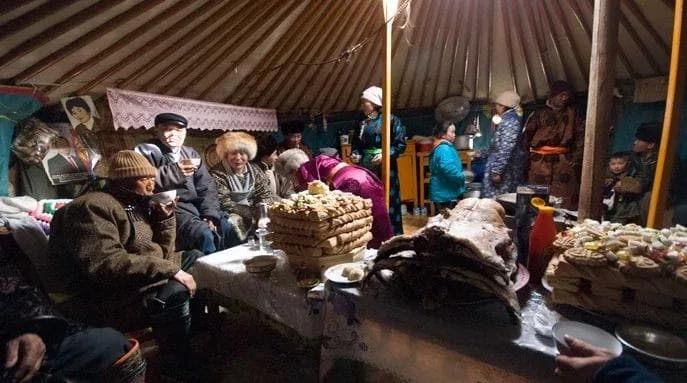
How Mongolia Celebrates Lunar New Year (Tsagaan Sar)

From late-January to mid-February, Mongolia celebrates its new year, Tsagaan Sar. It is the most joyous occasion for the country's nomadic herders as it marks the coming of spring after the long and harsh winter where hundreds of their animals can freeze to death. While Tsagaan Sar emphasizes family reunions like its Chinese counterpart, specific celebrations and rituals encompassing the holiday are unique.

Tsagaan Sar, meaning "White Moon", highlights a purity of intent or whiteness of spirit for the upcoming year. Mongols used to dress in all-white, ride a white horse, and eat only dairy products during the celebration. The holiday sees the largest annual human migration of Mongolia as hundreds of thousands of people take a journey back home, bringing the economy to a halt and causing a crazy traffic load. The preparation for Tsagaan Sar starts a month before the actual festival as families need to clean their homes, repair broken items, prepare feast food, and either buy or craft new traditional garments to wear on the big day. On New Year's Eve, families gather together at their parents or grandparents and feast until they are full so that they can live abundantly in the coming year.
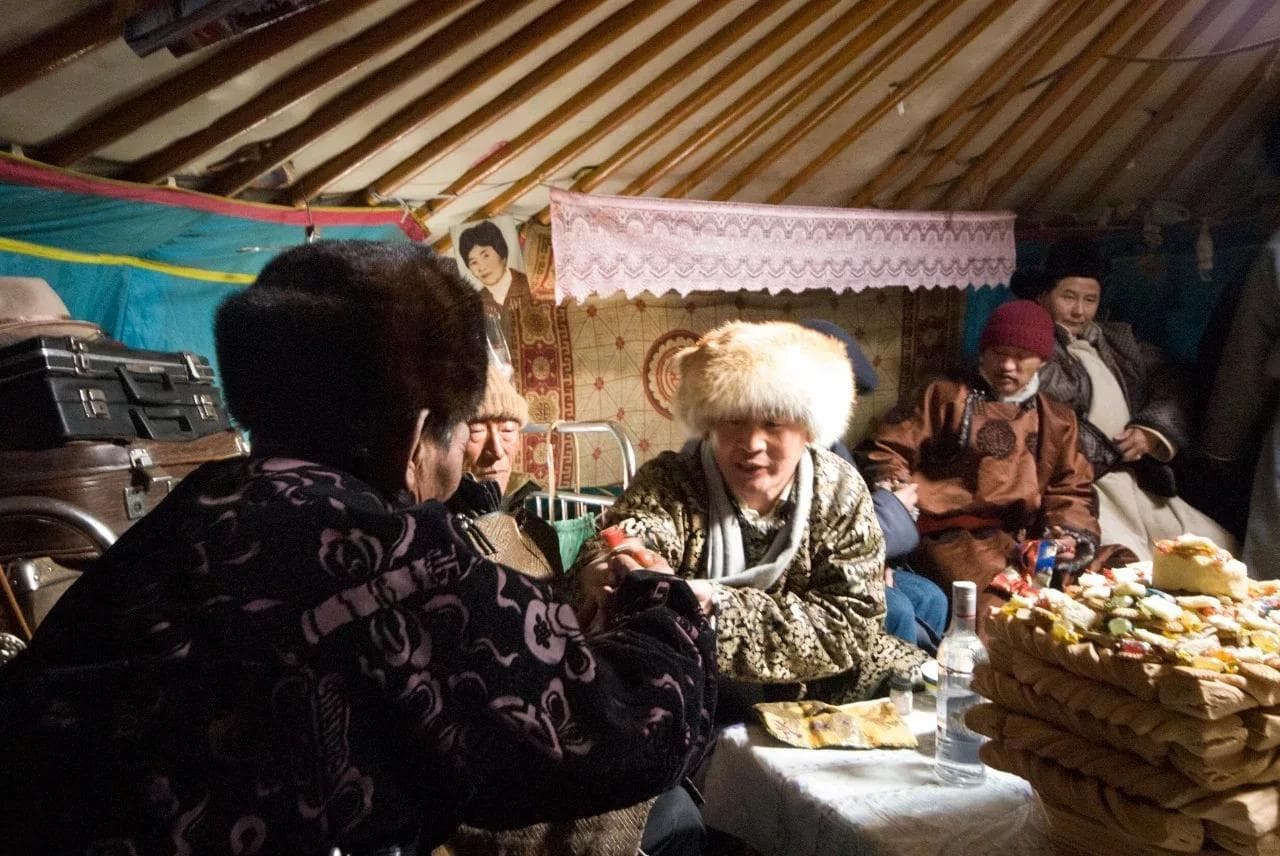
Mongolian Lunar New Year

On the first day of the year, everyone wakes up early in the morning and put on their new clothes. Men climb to the nearest hill to watch the first sunrise while women prepare milk tea to offer it to earth. After that, the family leaves home to visit their relatives, friends, and even neighbors. When a guest arrives, the host invites them in and greets them by offering snuff tobacco. The guests are then served with milk tea, dairy products, steamed meat dumplings known as buuz, and other delicacies. Upon their departure, the host must present gifts to the guests to thank them for paying a visit. This practice had become somewhat of a financial burden in recent years, as families strive to give guests lavish gifts to show how well they are doing. It is estimated that over 45% of the Mongolian elders take out a pension-backed loan to buy presents for guests, who can easily count to 100 people.
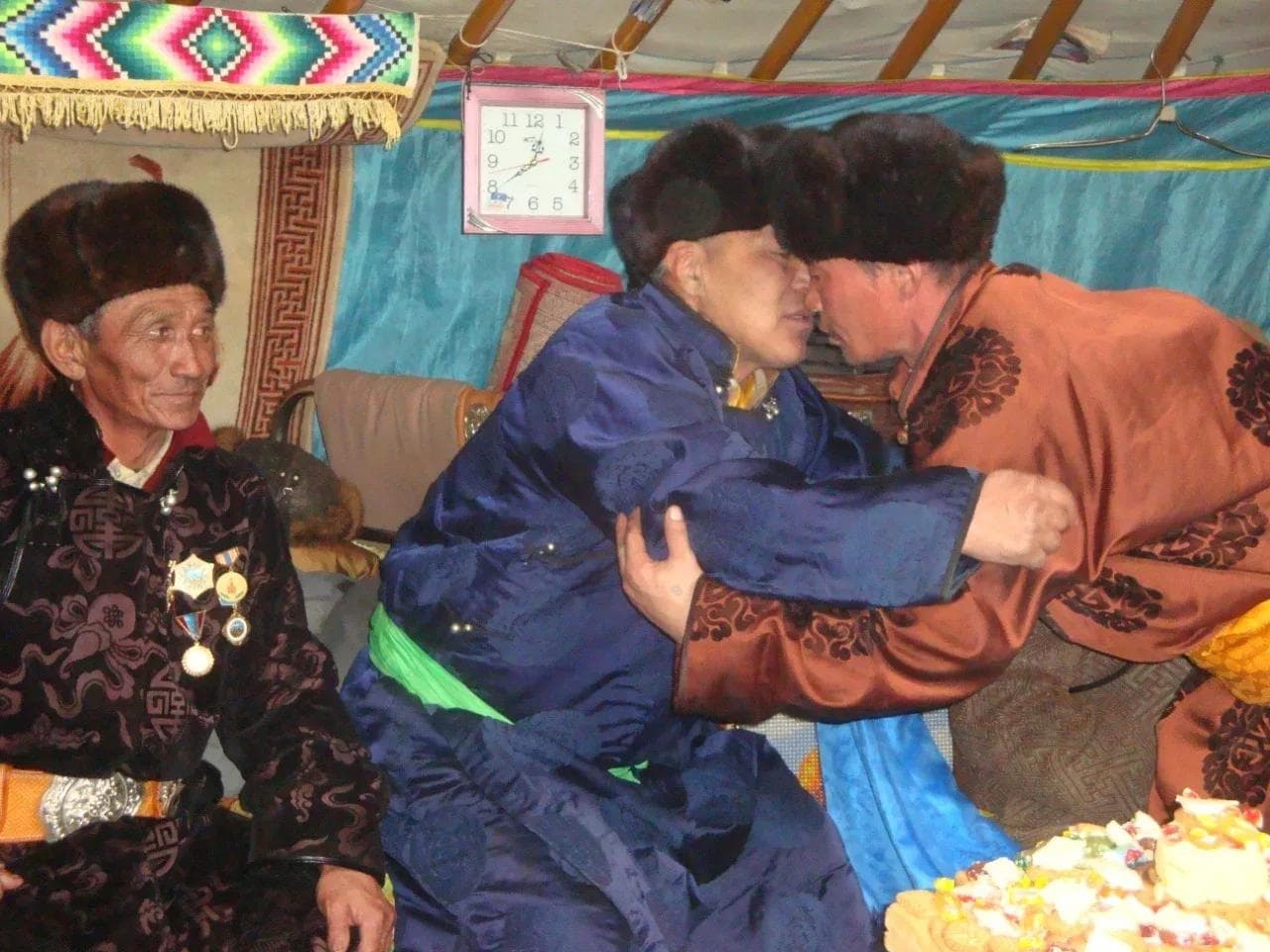
Mongolian lunar new year Tsagaan Sar

In 2020, the outbreak of COVID-19 in Wuhan had impacted scores of people hoping to catch up with families and friends on Lunar New Year. Like the rest of Asia, Mongolia has suspended the annual holiday and banned unapproved travel between provinces and the capital. This year, even harsher measures are being taken over concerns that large migration may spread the virus across the countryside. Despite the bad and good news, it is safe to say that Tsagaan Sar will make a comeback once the pandemic is over, as it is a holiday that had become part of Mongolia's national identity.

Share this article

Blogs

Welcome to the Mongolian Ways Travel articles!

nomadic family

8 Things To Do While Staying With Nomadic Family

A very special way to discover the lifestyle and traditions of the Mongols is to homestay few days with nomadic families. Mongolian nomads live in ger, a round felt-covered dwelling, which has been used by Central Asian nomads for centuries. The word ger is literally translated as home in Mongolian, while its Turkish term “yurt” means homeland. Indeed, the ger provides shelter in a landscape that is both beautiful and harsh. Without visiting this ancient accommodation and meeting families living there, one would never truly get an honest taste of the nomadic lifestyle that Mongolians still treasure to this day. About three- quarters of the country's population are estimated to be living as nomadic herders. These people are renowned for their wonderful hospitality towards visitors, because of their tradition of helping one another and isolation from the outside world. And we present to you 8 things you can experience while staying with Mongolian nomads.

horseback riding in mongolia

Horseback Riding In Mongolia

If you are planning to travel to Mongolia, horseback riding can be a startling experience to feel the deep connection of Mongolian nomads and their horses. For centuries, horses have been worshiped and respected by the steppe nomads. Having as many horses as people in a modern world proves how nomadic lifestyle is still revolving in Mongolia. They are used for transportation, herding, hunting, and horse racing. All children in the countryside learn to ride at the age of 4 and become jockeys by age of 7. Even today most Mongolians know how to ride a horse, whether they live in the city or in the countryside. Therefore, riding a horse in Mongolia is a great opportunity to feel the spirit of this nation.

shaman ceremony

Shamanism In Mongolia

Shamanism is a practice that involves a practitioner reaching altered states of consciousness to interact with the world of spirits. The term "shamanism" was first applied by Western anthropologists as outside observers of the ancient religion of the Turks and Mongols, and those of the neighboring Tungstic- and Samoyedic-speaking people. Fundamental belief of shamanism is that the universe is alive: all living beings have a conscious soul animating them – humans, animals, birds, insects, reptiles, plants, etc. A shaman is someone who has access to the world of spirits, enters into a trance state during a ritual, practices divination and healing with the help of spirits.

Golden Eagle - The Wings of the Kazakh

Golden Eagle - The Wings of the Kazakh

The Altai Mountains, one of the most secluded areas in the world, covers a vast area of over 16,000 kilometers, forming an impregnable barrier against globalization with its permanently snow-covered peaks that rise above 4,500m. This land of undiscovered beauty and wilderness is home to the Kazakhs, who have been preserving the ancient tradition of falconry to these days. Although falconry is still popular in many countries, including the United Kingdom and Saudi Arabia, hunting with golden eagles is exclusively a Kazakh practice.