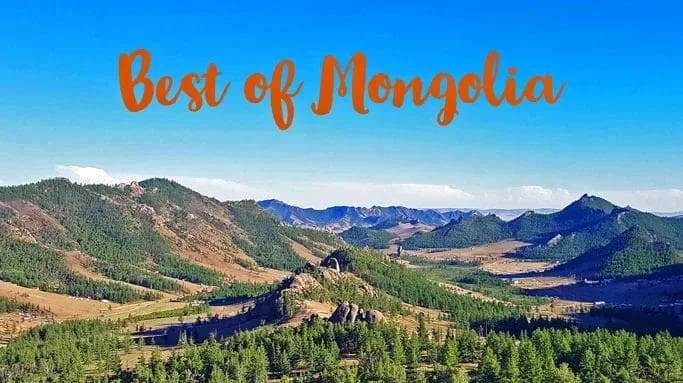
Best Of Mongolia
This best of Mongolia tours selection is based on our 20 years experience in Mongolian tourism, and we know they are great and you will never again want to travel Mongolia any other way.
Every tour to Mongolia passes through the capital city of Ulaanbaatar, a crowded town inhabited by those who were once nomads, but have neglected their traditional lifestyle in the hope of finding a little fortune in the city that seen some rapid developments not too long ago. The urban landscape quickly changes into expansive shopping malls and brand new residential complexes, shifting again to the scenes of the city center where modern high-rises are quickly built amidst soviet-era buildings. An orientation tour of the city center through the central square will introduce you to the figure of Sukhbaatar, one of the heroes of the communist revolution in the 1920s, boldly raising his arm towards the statue of Chinggis Khan, the nation’s forefather whose name wasn’t allowed to be mentioned during the 70 year communist reign. And the National History Museum, which holds a permanent exhibition on the different civilizations that have inhabited the territory of Mongolia from prehistoric times to the present. This exhibition includes a significant display of objects from the era of the Great Mongol Empire. Other significant sites are Gandan Monastery, Mongolia’s largest religious institute, one of the few religious structures survived the anti-religious purges of the 1930s, and the Black Market containing every single item a Mongolian might need, whether they are nomads or urban apartment dwellers, and the Zaisan Hill offering the panoramic view of the city. For entertainment, an impressive folk concert, featuring some traditional Mongolian art forms such as the famous throat singing, contortionist performance, passionate dances, long and short songs, is held in the Mongolian State Academic Theatre of Drama. And outside the city is where amazing happens!
1. MONGOL NOMADIC
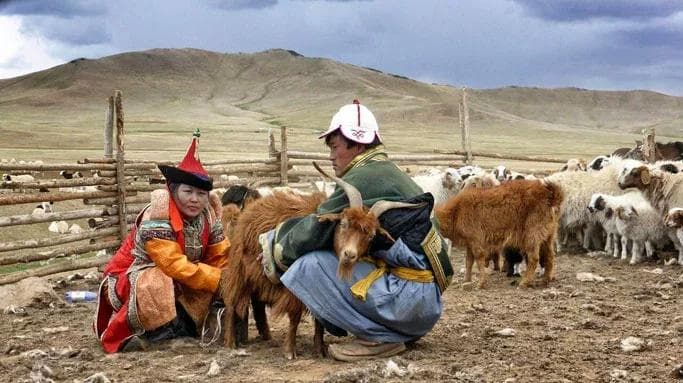
A place that recreates the lives of Mongolian nomads at the beginning of the 20th century. This was when Mongolia gained its independence from the Qing Dynasty and established itself as a reemerging nation under a living god-king. Here, a demonstration of how the nomads lived their lives during this era and a stunning performance of Mongolian horsemanship and are shown and learn about some traditions that are carried on to this very day.
2. KHUSTAI NATIONAL PARK
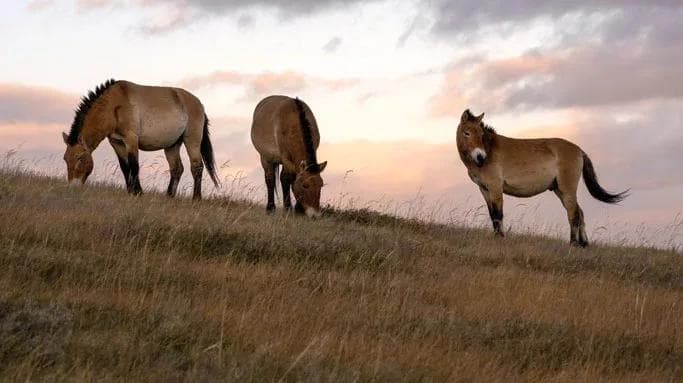
Coming face-to-face with a Takhi, the last and only remaining wild horse species in the world, is arguably the ultimate wildlife encounter. In Khustai National Park, located 80 km from Ulaanbaatar, you can observe them at close range. The takhi, also known as Przewalski’s horse, was on the brink of extinction during the last century, only a very few horses were left in zoos around Europe. This graceful steppe horse was returned to Mongolia, thanks to a reintroduction project. At present, over 300 individuals of takhi reside in this park, which is the highest number of Przewalski’s horse in the world. The Khustai National Park is also a home to over 50 species of mammals; including of Asian red deer, steppe gazelle, wildcat, wolf and lynx and 126 species of birds and 450 floras.
3. ERDENE ZUU MONASTERY
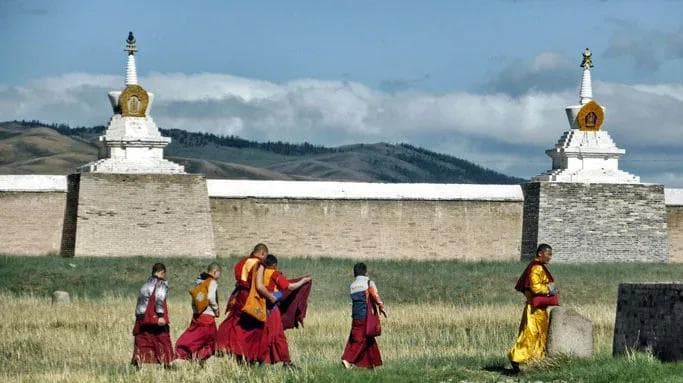
Erdene Zuu Monastery, built on the ruins of ancient capital of Mongol Empire, is the oldest Buddhist monastery of Mongolia founded by a descendant of Chinggis Khan in the 16th century. It had developed as not only the center of Buddhism but also as a center of intelligence and governance. Mongolian nobles used to gather within the monastery walls to discuss important state affairs. At its peak, Erdene Zuu had over 60 temples, around 300 gers inside the walls, and up to 1000 monks in residence. The monastery had gone through drastic destruction during the Stalinist purges of the 1930s and survived with only 18 temples today. A surprising number of statues, tsam masks and tankas were saved, possibly with the help of a few sympathetic military officers and devoted believers.
4. TUVKHUN MONASTERY
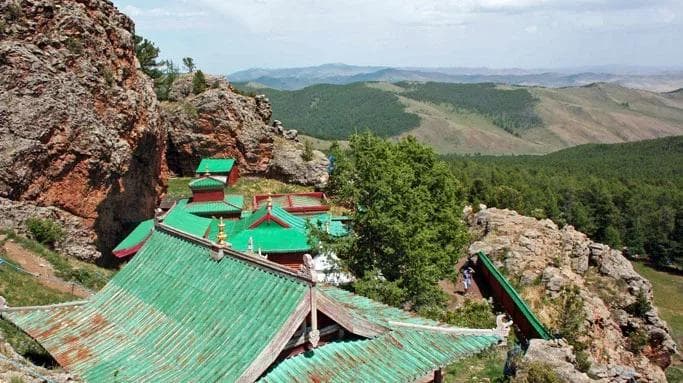
Located on top of a mountain with a splendid view of boundless pine forests, Tuvkhun monastery was established in 1651 by Zanabazar, Mongolia’s first religious leader and a prodigious sculptor. Seeking serenity to create his art and to meditate, Zanabazar built a monastery in this hidden place, using a natural system of caves and adding small wooden buildings. It was here that Zanabazar created his famous sculptures and created the Soyombo alphabet, which was used to translate Buddhist sutras from Sanskrit to Mongolian. Its key symbol is depicted on Mongolian flag, symbolizing the peace and unity of the nation.
5. ORKHON VALLEY
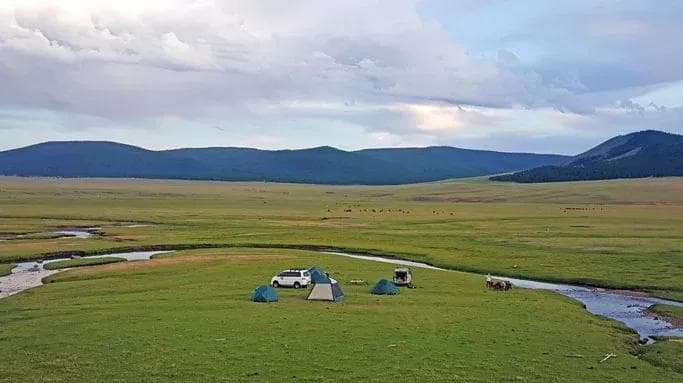
A UNESCO World Heritage Cultural Landscape, the Orkhon valley has served as the capital of several empires that ruled much of Central Asia and a crossroad of civilizations, linking East and West across the vast Eurasian landmass. The valley encompasses an extensive area of pastureland on both banks of the Orkhon River, the longest river of Mongolia. Within the cultural landscape are a number of archaeological remains and standing structures, including Turkish memorial sites of the 6th-7th centuries, the 8th — 9th centuries’ Uighur capital of Khar Balgas as well as the 13th-14th centuries’ ancient Mongol imperial capital of Karakorum.
6. RED WATERFALL
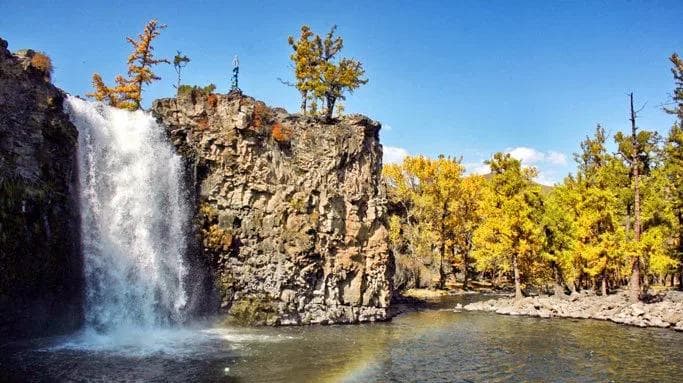
Red Waterfall lies in the Orkhon valley, A UNESCO World Heritage Cultural Landscape. About 20000 years ago, volcanic eruption had occurred in this valley, creating a basaltic field in hundreds of kilometers radius. The water pressure of Orkhon river and earthquakes following the eruption had slowly created this magnificent waterfall and a river canyon as long as 130 km. The Red Waterfall flows from an imposing height of 20 meters and its width is 10 meters.
7. TSENKHER HOT SPRINGS
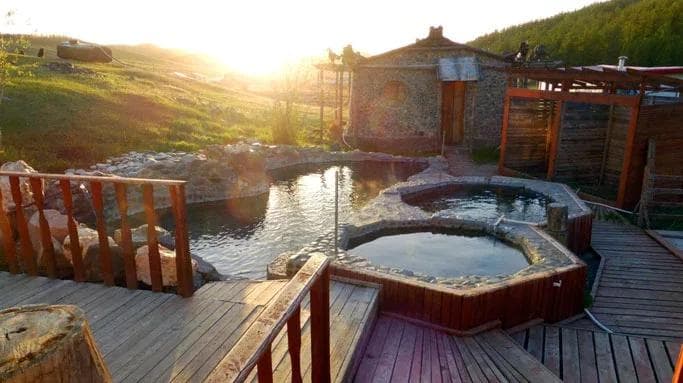
Set between forested hills, Tsenkher is a natural hot spring where travelers can enjoy a relaxing soak. Mineral and hot springs have been an important part of Mongolian traditional medicine. Arising from the ground at 85°C, locals believe that soaking in this hot spring can treat articular problems and nervous system diseases. Since the spring itself is boiling hot, the water is cooled and pumped into splash pools at the ger resorts built around the springs.
8. CHULUUT CANYON
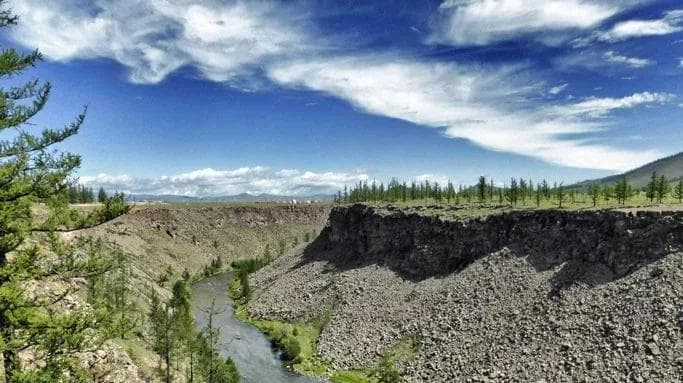
Chuluut is a 415-km-long river flowing through the valleys of the Khangai Mountains, the second largest mountain range of Mongolia. The river is known for its sheer basalt canyon, extending over 100 kilometers. The basalt is formed of lava of nearby extinct volcanoes such as Khorgo Volcano and others. The viewpoint of Chuluut Canyon is 25 meters high, and the way to the bottom of the canyon is an amusing experience for the adventurous souls.
9. KHORGO VOLCANO
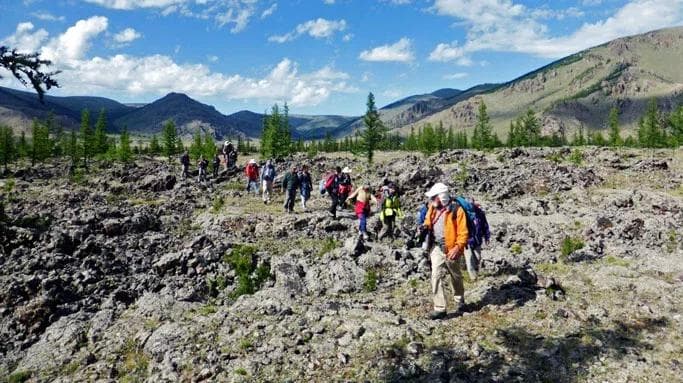
With its surrounding basalt field, this 200m-tall extinct volcano dominates the area to the east of the lake. Marked as the youngest volcano in the country, Khorgo erupted only 8000 years ago, changing its surroundings once and for all. While the hot lava had formed a 40 m thick basalt layer, the shooting rocks had created over 10 caves. Today the basalt field is covered by forest and vegetation as the volcanic soil is rich with minerals. With 200m radius and 80m depth, Khorgo’s crater provides a rare view of an extinct volcano.
10. GREAT WHITE LAKE
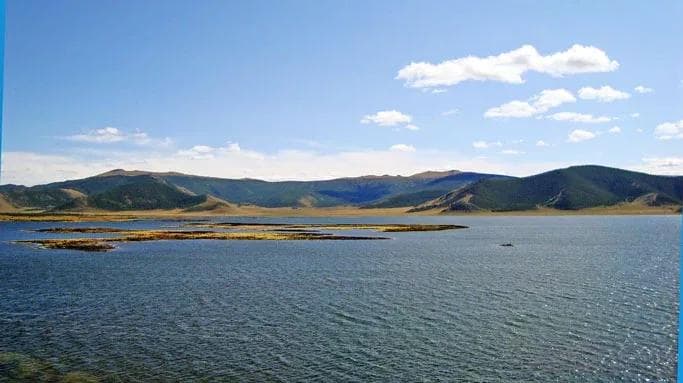
Located close to the Khorgo extinct volcano, Great (Terkhi) White Lake is a freshwater lake, covering an area of 61 square kilometers. It has more than 10 species of fish such as Taimen, perch, lenok and pike. It’s registered in Ramsar’s Convention as many migratory birds including swans, shelduck, duck, gull, common heron and great white egret nest in summer. The lake was formed 8000 years ago during the last eruption of Khorgo volcano when a colossal amount of white-hot lava blocked the bed of nearby rivers.
11. DEERSTONES AT ERHIL LAKE
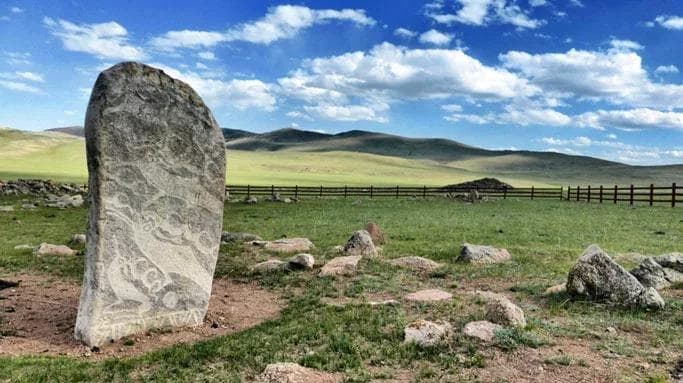
The ancient burial complex, located in the valley of Lake Erkhil, presents the mysterious deer stone monuments from the Bronze age. The term “deer stone” is derived from highly artistic illustrations of deer on stone. Researchers believe that these sophisticated statues, which require enormous effort and skill, were dedicated to the great warriors of a tribe. Hence, on the statue, there are engravings of various types of weapons such as daggers, bows with cases and shields. The Erkhil lake complex includes 3.8m tall deer stone, which is considered to be the tallest in Mongolia.
12. LAKE KHUVSGUL
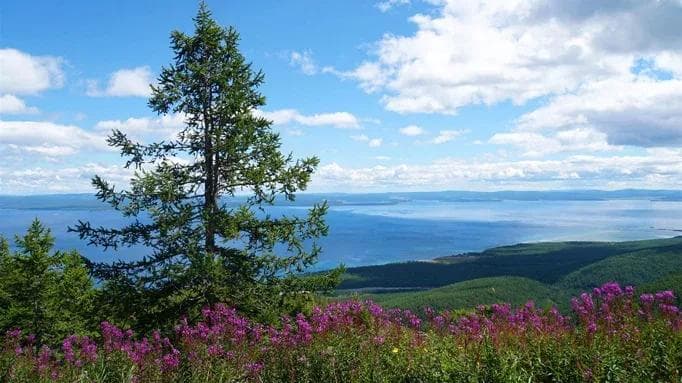
Renowned as “A blue pearl” for its color, lake Khuvsgul is the second-most voluminous freshwater lake of Asia. It is home to 12 species of fish and over 200 species of birds. Although the lake is an astonishing sight on its own, the Sayan mountains surrounding it creates a breathtaking scenery. These forested mountains, reaching some 3400 meters above sea level, are inhabited by many wild animals such as argali sheep, ibex, bear, sable and moose. Lake Khuvsgul and its amazing surroundings are home to several of Mongolia’s ethnic minorities. Among them are the Tsaatan, who are one of the last nomadic reindeer herding people in the world. The Tsaatan, also known as reindeer or dukha people, are the smallest ethnic minority of Mongolia, with less than 300 individuals living in the taiga and only a couple of hundred more living in towns and cities.
13. TERELJ NATIONAL PARK
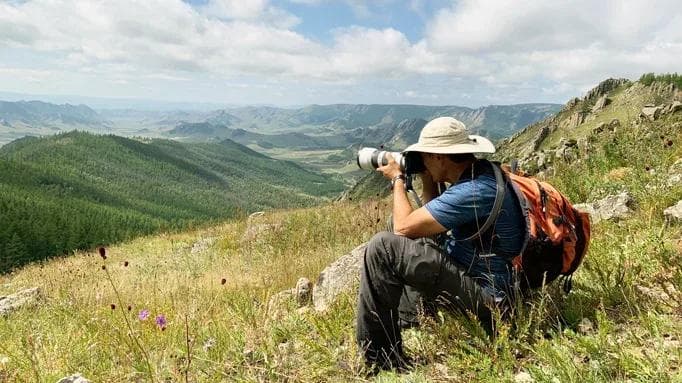
Located only 70 km from Ulaanbaatar, Terelj National Park presents a breath-taking granite mountain formation, scenic valleys, winding rivers, and restful groves of trees. Many nomads live in the park itself, where they find good grazing for their animals. One of the great allures of the park is wildflowers. Alpine Anemone and Pasqueflower are the very first flowers to bloom in the beginning of summer. Edelweiss, a national symbol of Romania, Austria, Bulgaria, Slovenia, and Switzerland, is found in its steppes and mountain belts.
14. CHINGGIS KHAN MONUMENT
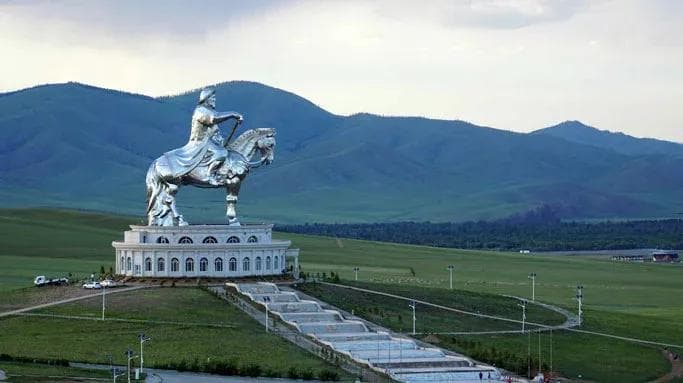
This mighty structure, rising 40 meters in height over the surrounding steppes, plays a major symbol in renewing the soul of Mongolian nation, after more than 300 years of foreign sovereignty over its people and territory. The dramatic statue was constructed in 2008 from stainless steel, has a lift (elevator) rising up its tail, from where there are steps to the horse’s head. It is said that the statue is located where Genghis Khan found the golden whip that inspired his future conquests, as finding a whip symbolizes worldly domination and sovereign authority.
These are the best attractions of tours in Mongolia have to offer in a single trip for visitors willing to travel in style and comfort. The Jewels of Mongolia, a 13 day tour will take you through the northern edge of the Gobi Desert, the ancient capital of the Mongol Empire at Karakorum, hot springs, volcanoes, rivers and lakes.


